
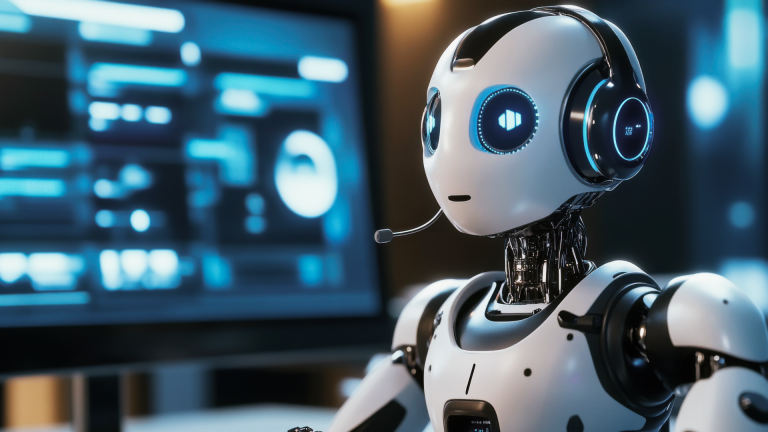
Artificial Intelligence for Revolutionizing the Future of Work: A Comprehensive Guide
The landscape of global employment is undergoing an unprecedented transformation, driven primarily by the relentless march of artificial intelligence (AI). Far from a distant sci-fi concept, AI is actively revolutionizing the future of work right now, reshaping industries, redefining job roles, and demanding new competencies from the workforce. This comprehensive guide delves deep into how AI is not just automating tasks but fundamentally augmenting human capabilities, creating new opportunities, and challenging traditional notions of productivity and employment. Understanding this seismic shift is crucial for individuals, businesses, and policymakers alike to thrive in the impending AI-powered economy.
The Dawn of a New Work Era: AI's Unstoppable Advance
The integration of AI into our professional lives is no longer a matter of if, but when and how. From sophisticated algorithms powering predictive analytics in finance to machine learning enhancing customer service chatbots and robotic process automation streamlining manufacturing, AI is permeating every sector. This isn't just about efficiency gains; it's about a fundamental shift in how work gets done. Tasks that were once tedious, repetitive, or data-intensive are now being handled with unparalleled speed and accuracy by intelligent systems. This frees up human capital to focus on higher-value activities that require creativity, critical thinking, emotional intelligence, and complex problem-solving – areas where human superiority remains unchallenged.
Understanding AI's Core Impact on Employment
- Automation of Repetitive Tasks: AI excels at automating routine, rule-based processes. This includes data entry, basic customer service inquiries, repetitive manufacturing tasks, and even some aspects of legal discovery or medical diagnostics. The goal isn't necessarily job elimination, but rather task automation, which leads to job redefinition.
- Augmentation of Human Capabilities: Perhaps the most profound impact of AI is its ability to augment human performance. AI tools can analyze vast datasets, identify patterns invisible to the human eye, and provide insights that enhance decision-making. Examples include AI-assisted design, AI-powered diagnostic tools for doctors, and smart assistants for project managers. This leads to what we call augmented intelligence.
- Creation of New Job Roles: While some roles may diminish, AI is simultaneously creating entirely new categories of jobs. These include AI trainers, data scientists, machine learning engineers, AI ethicists, AI-human collaboration specialists, and prompt engineers. The demand for professionals who can develop, deploy, and manage AI systems is skyrocketing.
Redefining Roles: How AI is Shifting Job Descriptions
The traditional job description is becoming a fluid concept. Instead of wholesale job replacement, we are witnessing a significant workforce transformation where existing roles are being reconfigured. A human resources manager might leverage AI to analyze talent acquisition data, an accountant might use AI to automate ledger entries and focus on strategic financial planning, and a marketing professional might employ AI to personalize customer experiences at scale. The emphasis is moving from execution of routine tasks to oversight, interpretation, and strategic application of AI-generated insights.
Examples of AI-Driven Job Evolution
- Healthcare Professionals: AI assists in diagnosing diseases, personalizing treatment plans, and managing patient records. Doctors and nurses will spend less time on administrative burdens and more on patient care, empathy, and complex medical decisions.
- Financial Analysts: AI algorithms can process market data, identify trends, and predict financial outcomes far faster than humans. Analysts will transition from data crunching to interpreting AI models, advising clients, and developing innovative financial strategies.
- Customer Service Representatives: AI-powered chatbots handle routine queries, freeing human agents to manage complex, emotionally charged, or unique customer issues, providing a higher level of personalized service.
- Manufacturing and Logistics: Robotics and AI optimize supply chains, manage inventory, and automate assembly lines. Human workers supervise these systems, perform maintenance, and handle intricate, non-routine tasks.
The Rise of Human-AI Collaboration: A Symbiotic Relationship
The most successful future of work scenarios envision a powerful synergy between humans and AI, rather than a competition. This human-AI collaboration leverages the unique strengths of each. AI provides speed, computational power, and pattern recognition, while humans bring creativity, emotional intelligence, ethical reasoning, and adaptability. This symbiotic relationship promises unprecedented levels of productivity and innovation.
Strategies for Effective Human-AI Teaming
- Clear Task Delegation: Identify which tasks are best suited for AI (repetitive, data-heavy) and which require human intervention (creative, empathetic, strategic).
- Continuous Learning and Adaptation: Both humans and AI systems need to learn from each other. Humans must understand AI's capabilities and limitations, while AI systems can be trained on human feedback.
- Ethical Guidelines: Establish clear ethical frameworks for AI deployment, ensuring fairness, transparency, and accountability in human-AI interactions. [Learn more about AI ethics]
- Skill Overlap and Complementarity: Foster skills that complement AI, such as critical thinking, complex problem-solving, creativity, and inter-personal communication.
Navigating the Skill Gap: Preparing for the AI-Powered Workforce
The rapid advancement of AI necessitates a proactive approach to skill development. Traditional education and training models may not be sufficient to prepare individuals for the evolving demands of the AI era. A significant skill gap is emerging between the capabilities of the current workforce and the requirements of AI-driven jobs. Addressing this requires a multi-faceted strategy focused on lifelong learning, reskilling initiatives, and upskilling programs.
Essential Skills for the AI Era
To thrive in a workplace increasingly shaped by AI, individuals must cultivate a blend of technical and uniquely human skills:
- Digital Literacy & AI Fluency: Understanding how AI works, its applications, and its limitations. This doesn't mean everyone needs to be a coder, but rather a proficient user and interpreter of AI tools.
- Critical Thinking & Problem-Solving: AI can provide data and insights, but humans must interpret them, identify root causes, and devise creative solutions to complex, unstructured problems.
- Creativity & Innovation: AI can generate ideas, but true innovation often stems from human imagination, intuition, and the ability to connect disparate concepts.
- Emotional Intelligence & Collaboration: As AI handles more technical tasks, human interaction, empathy, negotiation, and teamwork become even more critical for successful outcomes.
- Adaptability & Lifelong Learning: The pace of technological change means continuous learning is no longer optional. Individuals must be agile and willing to acquire new knowledge and skills throughout their careers.
- Data Interpretation & Analytics: While AI processes data, humans need to understand how to ask the right questions, interpret AI-generated insights, and make data-driven decisions.
Actionable Tips for Individuals
Don't wait for the future; start preparing today:
- Identify AI's Impact on Your Role: Research how AI and automation technologies are affecting your industry and specific job function.
- Upskill and Reskill Proactively: Enroll in online courses, certifications, or workshops focused on AI tools, data analytics, or relevant digital skills. Focus on skills that complement AI, not compete with it.
- Embrace Lifelong Learning: Cultivate a mindset of continuous learning. Follow industry trends, read expert analyses, and engage in professional development.
- Develop Human-Centric Skills: Sharpen your communication, creativity, critical thinking, and emotional intelligence. These are your unique selling propositions in an AI-augmented world.
- Network and Collaborate: Connect with peers and mentors who are navigating similar transitions. Collaboration fosters new ideas and support systems.
Strategic Imperatives for Businesses: Embracing AI for Growth
For organizations, embracing AI is not just about staying competitive; it's about unlocking new avenues for productivity gains, innovation, and economic growth. A strategic approach to AI adoption involves more than just investing in technology; it requires a cultural shift, investment in human capital, and a clear vision for the digital transformation of the enterprise.
Key Business Strategies for AI Integration
- Develop an AI Strategy: Define clear objectives for AI implementation, whether it's enhancing customer experience, optimizing operations, or developing new products and services.
- Invest in Workforce Development: Prioritize reskilling initiatives and upskilling programs for your existing employees. This fosters internal talent mobility and reduces the need for external hiring.
- Foster a Culture of Experimentation: Encourage employees to experiment with AI tools and integrate them into their daily workflows. Create safe spaces for learning and failure.
- Prioritize Data Governance: High-quality, well-managed data is the fuel for AI. Establish robust data collection, storage, and ethical usage policies.
- Redesign Workflows: Don't just overlay AI onto existing processes. Re-evaluate and redesign workflows to maximize the symbiotic relationship between humans and AI.
- Lead with Ethics: Implement clear ethical guidelines for AI development and deployment to build trust and ensure responsible innovation.
Ethical Considerations and the Future of Fair Work
As AI becomes more pervasive, critical ethical questions arise concerning bias, transparency, accountability, and the equitable distribution of its benefits. Ensuring an ethical AI framework is paramount to building a future of work that is fair, inclusive, and beneficial for all members of society. Issues like algorithmic bias in hiring, data privacy, job displacement, and the digital divide require careful consideration and proactive policy-making.
Addressing Ethical Challenges
- Bias Mitigation: Actively work to identify and mitigate biases in AI algorithms, particularly those used in hiring, performance evaluation, and decision-making processes.
- Transparency and Explainability: Strive for "explainable AI" (XAI), where the decision-making process of AI systems is understandable and auditable, especially in critical applications.
- Accountability Frameworks: Establish clear lines of accountability for AI failures or unintended consequences. Who is responsible when an AI system makes a mistake?
- Data Privacy and Security: Implement robust measures to protect sensitive data used by AI systems, adhering to strict privacy regulations.
- Inclusive Design: Ensure AI tools and systems are designed with diverse user needs in mind, promoting accessibility and preventing digital exclusion.
- Social Safety Nets: Policymakers must consider new social safety nets, economic growth strategies, and lifelong learning initiatives to support workers through inevitable transitions.
Frequently Asked Questions
Will artificial intelligence replace all human jobs?
No, the consensus among experts is that artificial intelligence will not replace all human jobs. Instead, it will primarily automate specific tasks within jobs, leading to a job evolution rather than mass extinction. Roles requiring creativity, critical thinking, emotional intelligence, and complex problem-solving are expected to remain human-centric, often augmented by AI. Many new job categories will also emerge directly from AI development and implementation, such as AI trainers, data ethicists, and human-AI collaboration managers.
What new job roles will AI create in the future of work?
AI is set to create a multitude of new job roles. These include, but are not limited to: AI Ethicists, who ensure AI systems are fair and unbiased; AI Trainers and Data Curators, who teach and refine AI models; Prompt Engineers, who specialize in crafting effective inputs for generative AI; Robotics Coordinators, who manage human-robot interactions; AI Product Managers, who oversee the development of AI-powered solutions; and Human-AI Interaction Designers, focused on optimizing the collaboration between people and intelligent systems. These roles highlight the shift towards managing, developing, and leveraging AI rather than simply performing manual tasks.
How can individuals prepare for an AI-driven future of work?
To prepare for an AI-driven future of work, individuals should focus on continuous skill development. This involves acquiring digital literacy and understanding AI's fundamentals, while simultaneously enhancing uniquely human skills like critical thinking, creativity, emotional intelligence, and complex problem-solving. Proactively seeking out reskilling initiatives and upskilling opportunities, such as online courses or certifications in data analytics or AI tools, is crucial. Cultivating adaptability and a mindset of lifelong learning will ensure resilience in a rapidly changing employment landscape.
What are the biggest challenges for businesses integrating AI?
Businesses face several significant challenges when integrating AI. These include: the high initial investment in technology and talent; ensuring data quality and governance, as AI relies on vast, clean datasets; managing the workforce transformation and addressing employee concerns about job security through effective change management; mitigating algorithmic bias and ensuring ethical AI deployment; and developing a clear, actionable AI strategy that aligns with overall business objectives. Overcoming these challenges requires strategic planning, investment in human capital, and a commitment to responsible innovation.
Is AI integration an ethical concern for employment?
Yes, AI integration poses significant ethical concerns for employment. Key issues include algorithmic bias in hiring and promotion processes, which can perpetuate or exacerbate existing inequalities; concerns around data privacy and surveillance; the potential for job displacement, particularly for low-skilled workers, raising questions about social equity and the need for new social safety nets; and the lack of transparency or "black box" nature of some AI systems, making it difficult to understand their decision-making. Addressing these concerns requires robust ethical AI frameworks, transparent policies, and proactive governmental and corporate oversight to ensure a fair and inclusive future of work.

0 Komentar