
Complete Guide
In today's interconnected world, the promise of the Internet of Things (IoT) extends far beyond urban centers. However, deploying IoT connectivity options for rural area deployments presents a unique set of challenges that demand specialized solutions. From vast agricultural lands requiring precise remote monitoring to remote infrastructure needing asset management, traditional high-bandwidth networks often fall short. This comprehensive guide delves into the most viable and efficient connectivity solutions, helping businesses and innovators bridge the digital divide and unlock the full potential of IoT in even the most isolated environments. We'll explore various technologies, their strengths, weaknesses, and practical considerations, ensuring your rural IoT initiatives are built on a foundation of robust, reliable, and cost-effective connectivity.
Understanding the Unique Challenges of Rural IoT
Deploying IoT solutions in rural areas is fundamentally different from urban deployments. The very nature of these environments introduces significant hurdles that necessitate a distinct approach to connectivity. Understanding these barriers is the first step toward selecting the right technology.
Barriers to Traditional Connectivity
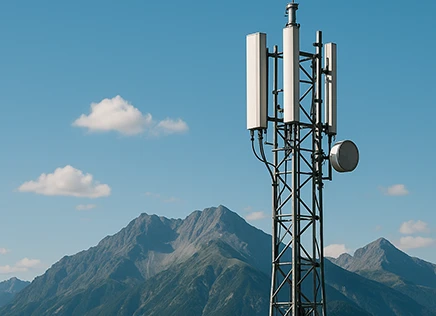
- Limited Infrastructure: Rural areas often lack the extensive fiber optic backbones or dense cellular tower coverage found in cities. This absence of robust network infrastructure makes traditional broadband or 4G/5G cellular connectivity either unavailable or prohibitively expensive to deploy.
- Vast Distances: Devices may be spread across miles of farmland, forests, or remote pastures, requiring connectivity solutions capable of transmitting data over long ranges without excessive power consumption.
- Power Constraints: Many rural IoT applications, such as agricultural IoT sensors or wildlife trackers, operate off-grid. This demands highly energy-efficient communication protocols that can extend battery life for months or even years.
- Harsh Environments: Exposure to extreme temperatures, moisture, dust, and wildlife requires ruggedized devices and connectivity that can withstand challenging outdoor conditions.
- High Deployment and Maintenance Costs: Laying new cables or erecting towers in remote, sparsely populated areas is incredibly expensive, making ROI difficult for many applications.
The Need for Specialized Solutions
Given these challenges, the conventional wisdom for IoT connectivity simply doesn't apply. Instead, the focus shifts to technologies designed for long-range, low-power, and often low-data-rate transmissions. Solutions must prioritize cost-effective solutions for both deployment and ongoing operation, especially concerning data transmission rates and power consumption. The objective is to find the sweet spot where coverage, power efficiency, data throughput, and cost align with the specific needs of rural applications like smart farming or environmental monitoring.
Key IoT Connectivity Technologies for Rural Areas
The landscape of IoT connectivity for remote deployments is evolving rapidly, with several promising technologies emerging as frontrunners. Each has distinct characteristics that make it suitable for different use cases.
Evaluating LPWAN Technologies: LoRaWAN, Sigfox, NB-IoT, and Cat-M1
Low-Power Wide-Area Networks (LPWAN) are purpose-built for IoT devices that send small amounts of data over long distances with minimal power. They are a game-changer for off-grid solutions and applications where battery life is paramount.
- LoRaWAN: Open Standard, Private Networks
- Description: LoRaWAN is an open, non-cellular LPWAN specification based on Semtech's LoRa radio technology. It allows for private network deployments, offering significant control and flexibility.
- Strengths: Excellent range (up to 15-20 km in rural areas), very low power consumption, secure two-way communication, and an open ecosystem fostering innovation. Ideal for livestock tracking, soil moisture sensors, and remote weather stations.
- Weaknesses: Requires deployment of gateways, which can be an initial infrastructure investment. Data rates are low, typically suited for small packets of sensor data.
- Practical Advice: Consider LoRaWAN for scenarios where you need to own and manage your network, or where community networks (like The Things Network) are available. It's often the most flexible for custom, localized deployments.
- Sigfox: Ultra-Narrowband Simplicity
- Description: Sigfox is a proprietary LPWAN technology operating on a global network. It uses ultra-narrowband technology for simple, low-cost, and low-power communication.
- Strengths: Extremely low power consumption, very low module cost, and a "ready-to-use" global network (where available), simplifying deployment. Excellent for basic sensor data like temperature or humidity.
- Weaknesses: Limited message capacity (small payloads, limited messages per day per device), primarily one-way communication (uplink), and network coverage can be sporadic in some very remote regions.
- Practical Advice: Best suited for applications requiring infrequent, small data bursts, such as simple utility metering or basic environmental monitoring, especially where an existing Sigfox network covers the area.
- NB-IoT and Cat-M1: Licensed Spectrum Benefits
- Description: These are cellular LPWAN technologies standardized by 3GPP, operating on licensed cellular spectrum. They benefit from the security and reliability of existing cellular networks.
- Strengths: High reliability and security (leveraging carrier-grade networks), deeper penetration indoors/underground than traditional cellular, and lower power consumption than traditional 4G. Cat-M1 supports voice and higher data rates than NB-IoT, making it suitable for more complex remote asset monitoring. NB-IoT is optimized for very low data rates and extreme power efficiency.
- Weaknesses: Dependent on existing cellular network coverage, which can be patchy in truly remote rural areas. Higher module costs and subscription fees compared to unlicensed LPWANs.
- Practical Advice: Evaluate these options if your rural deployment falls within existing cellular coverage areas. They offer a good balance of range, power efficiency, and data capacity for applications like smart utility grids or more active environmental sensors.
Leveraging Satellite IoT for Ultimate Remote Coverage
When terrestrial networks are simply non-existent, satellite IoT emerges as the undisputed champion for truly global and remote connectivity. It's the go-to for applications in vast, uninhabited regions or offshore locations.
Advantages of Satellite Connectivity
- Global Coverage: Satellites provide connectivity virtually anywhere on Earth, making them ideal for deployments in extremely remote locations without any terrestrial infrastructure. This is crucial for applications like tracking assets in the Arctic or monitoring pipelines in deserts.
- Reliability: Less susceptible to terrestrial disruptions like natural disasters or power outages affecting ground infrastructure.
- Scalability: Easily scales to cover large geographical areas without needing to build out ground-based networks.
Challenges and Cost Implications of Satellite IoT
- Higher Latency: Data transmission takes longer due to the distance to satellites, making it unsuitable for real-time, low-latency applications.
- Higher Cost: Both module costs and ongoing subscription fees are generally higher than terrestrial options. This impacts the overall data transmission costs significantly.
- Power Consumption: While improving, satellite modules typically consume more power for transmission than LPWAN, requiring larger batteries or solar power.
- Line-of-Sight: Requires a clear line of sight to the sky, which can be challenging in dense forests or mountainous terrain.
- Practical Advice: Reserve satellite IoT for mission-critical applications in truly isolated areas where no other option exists. Think long-haul logistics tracking, maritime IoT, or remote environmental monitoring in wilderness areas. Consider hybrid solutions where satellite acts as a backup or for initial data collection before a device enters a terrestrial network.
Hybrid Approaches and Specialized Solutions
Often, the best solution isn't a single technology but a combination, leveraging the strengths of each. This is particularly true for complex rural deployments.
Combining Technologies for Optimal Performance
- Satellite-LPWAN Hybrid: Use satellite for initial deployment and sporadic data transmission in ultra-remote areas, then switch to LoRaWAN or NB-IoT once devices enter an area with terrestrial coverage.
- Mesh Networking: For localized clusters of devices, mesh networks (e.g., using technologies like Zigbee or Thread) can extend the range from a central gateway, which then connects to a wide-area network (like cellular or satellite). This can be particularly useful for dense agricultural IoT deployments within a farm.
- Wi-Fi and Point-to-Point Wireless: For specific, localized high-bandwidth needs (e.g., video surveillance at a remote site), point-to-point wireless bridges can extend a local network to a remote building, which then connects to a broader network.
Emerging Technologies and Niche Solutions
Keep an eye on advancements in technologies like 5G non-terrestrial networks (NTN), which promise to integrate satellite communication more seamlessly into standard cellular chipsets, potentially lowering costs and improving accessibility for last-mile connectivity in rural settings.
Critical Considerations for Rural IoT Deployment Success
Choosing the right connectivity is just one piece of the puzzle. Successful rural IoT deployments require careful planning across several key areas.
Optimizing for Power Consumption
- Battery Life: Select devices and communication protocols designed for extreme energy efficiency. Prioritize solutions that offer deep sleep modes and transmit data infrequently.
- Energy Harvesting: Integrate solar panels, wind turbines, or kinetic energy harvesters to supplement or replace batteries, especially for devices in fixed locations. This is crucial for truly off-grid solutions.
- Duty Cycling: Program devices to transmit data only when necessary, minimizing radio-on time.
Data Management and Security
- Data Volume and Frequency: Design your application to send only essential data to minimize transmission costs and power usage.
- Security Protocols: Ensure data encryption and authentication are in place, especially when dealing with sensitive information from remote monitoring or critical infrastructure.
- Edge Computing: Process data locally on the device or a nearby gateway to reduce the amount of raw data transmitted over the network, thereby reducing data transmission costs and latency.
Scalability and Future-Proofing
- Modular Design: Choose IoT platforms and hardware that allow for easy expansion and integration of new devices or sensor types as your needs evolve.
- Standardization: Opt for technologies based on open standards where possible, reducing vendor lock-in and promoting interoperability.
- Network Evolution: Consider the long-term roadmap of your chosen connectivity provider. Will the network expand? Are there plans for technology upgrades that could impact your devices?
Cost-Benefit Analysis
A thorough financial evaluation is paramount. This includes not just the upfront hardware and connectivity module costs, but also ongoing subscription fees, data transmission charges, installation labor, and maintenance. Factor in the ROI derived from increased efficiency, reduced manual labor, or improved decision-making through data. Sometimes, a slightly higher initial investment in a more robust connectivity solution can lead to significant long-term savings through reduced maintenance and increased reliability.
Frequently Asked Questions
What are the primary challenges of deploying IoT in rural areas?
The main challenges for IoT connectivity options for rural area deployments include a lack of existing network infrastructure, vast distances between devices, significant power constraints for off-grid operations, exposure to harsh environmental conditions, and the high cost of deploying and maintaining traditional high-bandwidth networks. These factors necessitate specialized, often low-power and long-range, communication solutions for effective remote monitoring.
Which IoT connectivity option is most cost-effective for large rural deployments?
For large-scale rural deployments focused on small data packets, Low-Power Wide-Area Networks (LPWAN) like LoRaWAN or Sigfox are generally the most cost-effective. LoRaWAN allows for private network deployment, potentially reducing ongoing subscription fees, while Sigfox offers very low module costs and simple integration. Cellular LPWAN options like NB-IoT and Cat-M1 can also be cost-effective if existing cellular coverage is available, leveraging shared infrastructure and competitive data plans for agricultural IoT applications.
Can LoRaWAN be used for real-time tracking in remote agricultural settings?
While LoRaWAN offers excellent range and low power consumption, it is not ideal for true "real-time" tracking due to its inherent low data rate and latency characteristics. It is better suited for periodic updates (e.g., every few minutes or hours) of location data for livestock tracking or monitoring slow-moving assets. For high-frequency, real-time tracking, cellular IoT (especially Cat-M1) or even satellite IoT might be more appropriate, depending on the specific latency requirements and coverage availability in the remote agricultural setting.
How do I choose the best IoT connectivity for my specific rural application?
Choosing the best IoT connectivity option for rural area deployments requires a holistic assessment. Consider your application's specific needs regarding:
- Data Throughput: How much data needs to be sent, and how often?
- Range: How far apart are your devices and gateways?
- Power Consumption: What's your battery life target or power source availability?
- Latency: Is real-time communication critical, or are periodic updates sufficient?
- Cost: Evaluate both upfront hardware and ongoing operational expenses.
- Coverage: Is there existing network infrastructure (cellular, satellite) or will you need to deploy your own (LoRaWAN)?

0 Komentar