
Revolutionizing Automotive Repair: The Power of Augmented Reality in Maintenance
The automotive industry is constantly evolving, and at the forefront of this transformation is augmented reality in automotive repair and maintenance. This groundbreaking technology is not just a futuristic concept; it's a present-day solution profoundly impacting how vehicles are serviced, diagnosed, and repaired. From providing virtual overlays for complex engine components to offering real-time, step-by-step guidance, AR is set to redefine efficiency, accuracy, and training within the sector. Dive into how this innovative approach is transforming workshops and empowering technicians with unprecedented capabilities, promising a future of smarter, faster, and more precise vehicle servicing.
Understanding Augmented Reality in the Automotive Landscape
Augmented reality (AR) involves superimposing computer-generated images onto a user's view of the real world, providing a composite view. Unlike virtual reality (VR), which creates an entirely artificial environment, AR enhances the real world, adding digital information and interactive elements. In the context of automotive repair, this means technicians can see digital instructions, diagrams, or 3D models directly overlaid onto the physical vehicle they are working on. This direct, contextual information eliminates guesswork, reduces reliance on bulky manuals, and significantly streamlines complex procedures. The integration of AR technology is rapidly becoming a cornerstone for modern vehicle diagnostics and efficient maintenance workflows.
Key Applications of AR in Automotive Repair
The versatility of augmented reality allows for its application across numerous facets of automotive service and maintenance:
- Guided Repair & Maintenance: Technicians can wear smart glasses or use tablets to see digital instructions overlaid on engine parts or electrical systems. This could include torque specifications, part numbers, or the precise order of disassembly and reassembly. This reduces errors and speeds up the repair process, especially for new or less experienced technicians.
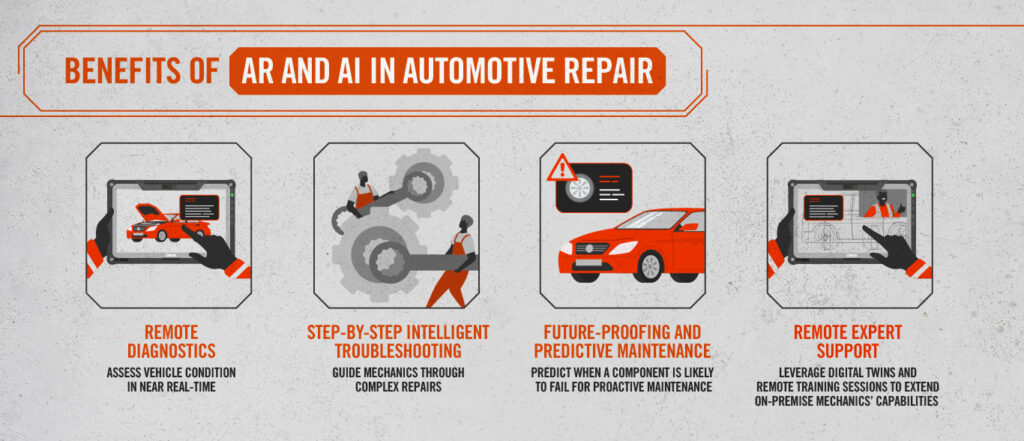
- Real-time Diagnostics: AR tools can visually highlight issues by overlaying sensor data or error codes directly onto the relevant vehicle components. For instance, an AR application could show a failing sensor by coloring it red on the live view of the engine, or display live performance metrics like voltage or temperature directly on the component itself. This enables faster and more accurate troubleshooting.
- Technician Training & Skill Development: AR provides an immersive and interactive training environment. New hires can practice complex repairs on virtual models superimposed on real vehicles without risking damage. Experienced technicians can refresh their skills or learn about new vehicle models and technologies without needing physical prototypes. This significantly cuts down training time and costs while improving knowledge retention.
- Remote Expert Assistance: When a technician encounters an unfamiliar or particularly challenging problem, they can use AR devices to connect with a remote expert. The expert can see exactly what the technician sees, draw annotations, highlight specific parts, or even project virtual tools onto the technician's view, guiding them step-by-step through the repair. This is invaluable for specialized tasks and reduces downtime.
- Quality Control & Inspection: AR can be used during post-repair inspections to ensure all components are correctly installed and meet specifications. Digital checklists and visual cues can guide inspectors, ensuring no step is missed and enhancing overall quality assurance.
- Customer Engagement & Transparency: Service advisors can use AR to visually explain necessary repairs to customers. By showing a 3D model of a worn brake pad overlaid on the vehicle's wheel, customers can better understand the issue, leading to increased trust and satisfaction.
The Tangible Benefits of Adopting Augmented Reality
The integration of augmented reality in automotive repair and maintenance brings a multitude of advantages that directly impact operational efficiency, cost-effectiveness, and service quality. These benefits are not merely theoretical but are being realized by forward-thinking service centers globally.
Enhancing Efficiency and Accuracy
- Reduced Repair Time: By providing instant visual guidance and access to critical information, AR significantly shortens the time required to diagnose and complete repairs. Technicians spend less time consulting manuals or searching for information.
- Minimized Errors: The ability to overlay precise instructions, torque settings, and component locations directly onto the real world drastically reduces the chances of human error during complex procedures. This leads to fewer comebacks and higher customer satisfaction.
- Improved First-Time Fix Rate: With enhanced diagnostic capabilities and guided workflows, technicians are more likely to correctly identify and resolve issues on the first attempt, boosting workshop productivity.
- Optimized Workflow: AR tools can integrate with existing workshop management systems, displaying work orders, parts availability, and historical service data directly within the technician's field of view, streamlining the entire service process.
Cost Savings and Resource Optimization
- Lower Training Costs: Interactive AR training modules are often more cost-effective than traditional hands-on training, requiring fewer physical resources and instructors.
- Reduced Downtime: Faster diagnostics and repairs mean vehicles spend less time in the shop, increasing throughput and revenue for service centers. For fleet operators, this translates to more vehicles on the road generating income.
- Efficient Use of Expert Resources: Remote expert assistance via AR allows a single expert to support multiple technicians across different locations, maximizing their impact and reducing travel expenses.
- Decreased Warranty Claims: Improved accuracy and reduced errors lead to fewer faulty repairs, consequently lowering the number of warranty claims and associated costs for manufacturers and dealerships.
Implementing Augmented Reality: Practical Advice and Considerations
While the benefits are clear, successful adoption of augmented reality in automotive repair and maintenance requires careful planning and strategic implementation. It's not just about acquiring the technology but integrating it seamlessly into existing operations.
Choosing the Right AR Hardware and Software
The market offers various AR solutions, from dedicated smart glasses and headsets (like Microsoft HoloLens, Magic Leap) to tablet-based applications. The choice depends on specific use cases, budget, and integration capabilities. Consider:
- Ergonomics and Comfort: For prolonged use, lightweight and comfortable devices are crucial for technician adoption.
- Field of View: A wider field of view provides a more immersive and practical experience for complex tasks.
- Integration with Existing Systems: Ensure the AR software can communicate with your current diagnostic tools, vehicle databases, and workshop management software for seamless data flow.
- Durability: Workshop environments can be harsh; hardware needs to be robust and resistant to dust, oil, and impacts.
Data Management and Content Creation
The effectiveness of AR heavily relies on the quality and availability of digital content. This includes:
- 3D Models and CAD Data: Converting existing CAD data of vehicle components into AR-compatible 3D models.
- Interactive Manuals: Digitizing traditional service manuals and enriching them with interactive AR elements.
- Real-time Data Feeds: Integrating live sensor data from vehicle diagnostics systems into AR overlays.
- Content Updates: Establishing a process for regularly updating AR content as new vehicle models and service procedures are introduced. Collaboration with OEMs (Original Equipment Manufacturers) is vital here to ensure accurate and up-to-date information.
Overcoming Challenges in AR Adoption
Despite its promise, implementing AR isn't without hurdles:
- Initial Investment: The upfront cost of hardware and software can be significant. However, the long-term ROI often justifies this expense.
- Technician Training & Acceptance: Some technicians may be resistant to new technology. Comprehensive training, demonstrating the clear benefits, and involving them in the selection process can foster adoption.
- Connectivity & Data Security: Reliable Wi-Fi or cellular connectivity is essential for real-time data access and remote assistance. Robust cybersecurity measures are critical to protect sensitive vehicle and customer data.
- Lighting Conditions: AR overlays can be affected by ambient light, potentially reducing visibility in very bright or dim environments. Hardware and software should be optimized for varying conditions.
The Future of Automotive Service: Beyond Today's AR
The journey of augmented reality in automotive repair and maintenance is just beginning. As technology advances, we can expect even more sophisticated applications that will further transform the industry.
- Digital Twin Integration: Imagine technicians working on a vehicle while simultaneously interacting with its precise digital twin in the AR environment, allowing for predictive maintenance and complex simulations before any physical work begins.
- AI-Powered Diagnostics: Future AR systems will likely incorporate advanced AI, enabling them to not only overlay data but also analyze it, predict potential failures, and suggest optimal repair strategies based on vast datasets and machine learning.
- Full Haptic Feedback: Combined with haptic technology, AR could allow technicians to "feel" virtual components, enhancing the realism and precision of remote assistance and training.
- Autonomous Repair Assistance: While still distant, the ultimate vision could involve AR systems guiding robotic arms or automated tools to perform highly repetitive or dangerous tasks under human supervision, further boosting efficiency and safety.
The continuous evolution of display technology, processing power, and connectivity will unlock new possibilities, making AR an indispensable tool for every automotive service professional. Investing in this technology today is not just about staying competitive; it's about preparing for the next generation of vehicle care.
Frequently Asked Questions
What specific types of AR devices are used in automotive repair?
In automotive repair, common AR devices include dedicated smart glasses or headsets (e.g., Microsoft HoloLens, Vuzix, RealWear) which allow for hands-free operation and direct visual overlays. Additionally, tablet-based AR applications are widely used, leveraging the device's camera to overlay digital information onto the live view of the vehicle. Some solutions also integrate with projectors to display AR content directly onto surfaces.
How does augmented reality improve technician training in the automotive sector?
Augmented reality significantly improves technician training by providing immersive, interactive, and hands-on learning experiences. Trainees can practice complex repair procedures on virtual models superimposed on real vehicles without risking damage to actual components. AR offers step-by-step visual guidance, allowing new technicians to learn at their own pace, visualize internal components, and understand spatial relationships, leading to faster skill acquisition and greater confidence. It also enables remote training and access to expert knowledge regardless of geographical location.
Can AR help with older vehicle models or only new ones?
While augmented reality in automotive repair and maintenance is often showcased with newer, technologically advanced vehicles, its benefits are not limited to them. AR can be highly effective for older vehicle models too, provided that the necessary digital content (such as 3D models, diagrams, and repair procedures) is available and digitized. For classic cars or models with limited documentation, AR can be instrumental in overlaying historical data or guiding technicians through complex, less-documented repairs, essentially bringing legacy knowledge into a modern, interactive format. The key is the creation and integration of the relevant digital assets.
Is augmented reality in automotive repair a cost-effective solution for small workshops?
The initial investment for augmented reality hardware and software can be a consideration for small workshops. However, the long-term benefits often lead to significant cost savings and improved profitability. These benefits include reduced repair times, fewer errors, improved technician efficiency, and lower training costs. As AR technology becomes more widespread and affordable, especially with smartphone and tablet-based solutions, it is becoming increasingly accessible for small and independent workshops looking to enhance their service capabilities and competitive edge. Evaluating the potential ROI against the initial outlay is crucial.

0 Komentar