
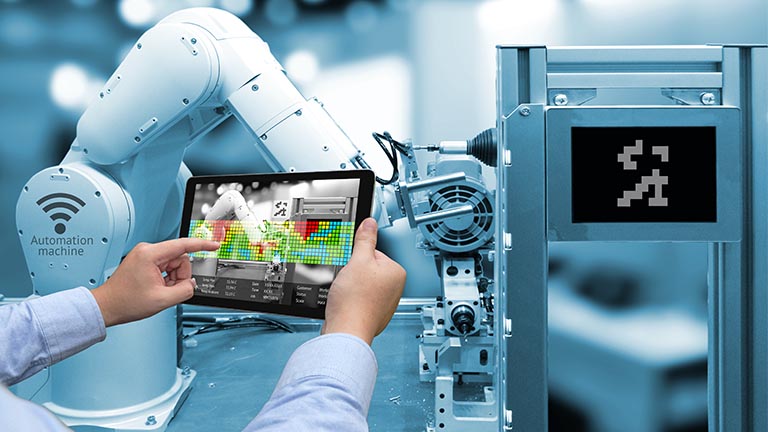
The Power of IoT Platforms for Predictive Maintenance: Preventing Industrial Machinery Failure
In today's hyper-competitive industrial landscape, the unexpected failure of critical machinery can lead to catastrophic downtime, significant financial losses, and even safety hazards. Businesses are constantly seeking innovative solutions to enhance operational efficiency and prevent costly disruptions. This is precisely where IoT platforms for predictive maintenance emerge as a game-changer, offering an unparalleled ability to monitor industrial machinery, anticipate potential failures, and schedule interventions precisely when needed. By harnessing the power of the Industrial Internet of Things (IIoT), organizations can transform their maintenance strategies from reactive firefighting to proactive, data-driven foresight, ensuring maximum asset uptime and optimizing resource allocation. This comprehensive guide delves into how these advanced platforms are revolutionizing asset management and safeguarding industrial operations.
Understanding the Core: How IoT Platforms Revolutionize Predictive Maintenance
Traditional maintenance approaches, such as reactive (fix-it-when-it's-broken) and preventive (scheduled inspections), often fall short. Reactive maintenance incurs high costs due to emergency repairs and lost production, while preventive maintenance can lead to unnecessary interventions or, conversely, fail to catch imminent issues between scheduled checks. Predictive maintenance, however, leverages data to forecast equipment failures before they occur. IoT platforms are the backbone of this paradigm shift, providing the infrastructure to collect, analyze, and act upon real-time machine data.
At its heart, an IoT platform for predictive maintenance connects various sensors attached to industrial assets – from pumps and motors to conveyors and robotics – to a centralized system. These sensors continuously collect vital operational data, including vibration, temperature, current, pressure, and acoustic signatures. This raw data is then transmitted, often via edge computing devices for initial processing, to a cloud-based or on-premise IoT platform. Here, sophisticated analytics, including machine learning algorithms, process the data to identify anomalies, detect subtle patterns indicative of impending failure, and generate actionable insights. The result is a shift from guessing when maintenance is needed to knowing precisely when and where it's required, drastically reducing unplanned downtime and optimizing maintenance schedules.
The Data Journey: From Sensors to Insights
The efficacy of an IoT predictive maintenance system hinges on its ability to capture and interpret machine data effectively. The journey typically unfolds in several critical stages:
- Sensor Deployment: High-fidelity sensors are strategically placed on critical components of industrial machinery. These can be wired or wireless, designed for specific data types like accelerometers for vibration, thermocouples for temperature, or current transformers for motor load.
- Data Acquisition and Transmission: Sensor data is collected at high frequencies. Edge devices often perform initial data filtering, aggregation, and pre-processing close to the source, reducing latency and bandwidth requirements before transmitting relevant data to the cloud.
- Platform Ingestion and Storage: The IoT platform ingests massive volumes of data, ensuring secure and scalable storage. This data often comes in various formats and velocities, requiring robust data management capabilities.
- Data Analytics and Modeling: This is where the magic happens. The platform employs advanced data analytics techniques, including statistical modeling and machine learning algorithms. These algorithms learn from historical data (both healthy and failure states) to build predictive models. They identify deviations from normal operating parameters, recognize patterns that precede failures, and estimate the remaining useful life (RUL) of components.
- Insight Generation and Visualization: The processed data is transformed into actionable insights, often presented through intuitive dashboards, real-time alerts, and detailed reports. Maintenance teams gain a clear, holistic view of asset health.
Key Features and Capabilities of Leading IoT Predictive Maintenance Platforms
A robust IoT platform for predictive maintenance industrial machinery failure is more than just a data collector; it's a comprehensive ecosystem designed for proactive asset management. Key capabilities include:
- Real-time Condition Monitoring: Continuous monitoring of critical parameters allows for immediate detection of anomalies. This feature is fundamental for condition monitoring and provides the raw data for predictive models.
- Advanced Analytics and AI/ML Integration: The ability to run complex machine learning models (e.g., anomaly detection, classification, regression) on collected data to predict failures with high accuracy. This includes algorithms for pattern recognition, fault diagnostics, and remaining useful life (RUL) estimation.
- Alerting and Notification Systems: Customizable alerts sent via email, SMS, or integrated into existing enterprise systems when predefined thresholds are breached or a failure is predicted.
- Data Visualization and Dashboards: User-friendly interfaces that present complex data in an understandable format, allowing engineers and managers to quickly grasp asset health, trends, and potential issues.
- Integration Capabilities: Seamless integration with existing enterprise systems such as Enterprise Resource Planning (ERP), Computerized Maintenance Management Systems (CMMS), and Asset Performance Management (APM) software. This ensures that maintenance work orders are automatically generated and aligned with business processes.
- Scalability and Security: The platform must be able to scale from a few assets to thousands, handling increasing data volumes. Robust cybersecurity measures are paramount to protect sensitive operational data.
- Digital Twin Creation: Some advanced platforms can create a virtual replica (digital twin) of physical assets, simulating their behavior under various conditions and predicting performance degradation.
Advanced Analytical Models for Failure Prediction
The intelligence within these platforms largely resides in their analytical capabilities. Leveraging techniques from artificial intelligence and machine learning, they move beyond simple threshold alarms:
- Anomaly Detection: Identifying data points that deviate significantly from learned normal behavior, often the first sign of an impending issue. Algorithms like Isolation Forest or One-Class SVM are common here.
- Classification Models: Training models to classify the type of fault occurring based on sensor data patterns (e.g., bearing failure, motor imbalance, pump cavitation).
- Regression Models: Predicting a continuous value, such as the degradation level of a component or its remaining useful life (RUL), allowing for precise scheduling of maintenance.
- Time Series Analysis: Understanding trends and seasonality in data to forecast future states and detect subtle long-term degradation patterns.
- Deep Learning: For highly complex machinery or when dealing with unstructured data (like audio or image), deep neural networks can uncover intricate relationships and patterns.
Benefits Beyond Downtime Prevention: Operational Efficiency and ROI
While preventing industrial machinery failure is the primary driver, the adoption of IoT platforms for predictive maintenance delivers a cascade of benefits that significantly impact the bottom line and overall operational excellence:
- Reduced Unplanned Downtime: This is the most direct and impactful benefit, as predicting failures allows for scheduled maintenance during non-critical periods, minimizing production losses.
- Optimized Maintenance Costs: By shifting from reactive to predictive, companies can avoid costly emergency repairs, reduce overtime pay for technicians, and eliminate unnecessary preventive maintenance. Parts are replaced only when truly needed, leading to significant savings in spare parts inventory.
- Extended Asset Lifespan: Early detection and intervention prevent minor issues from escalating into major damage, thereby extending the operational life of expensive industrial assets. This directly contributes to improved reliability engineering.
- Enhanced Safety: Malfunctioning machinery can pose serious safety risks. Predictive maintenance helps identify and address potential hazards before they lead to accidents, fostering a safer working environment.
- Improved Operational Efficiency: With reliable machinery, production processes become smoother, more predictable, and more efficient. Resource allocation (personnel, tools, parts) can be planned effectively.
- Better Resource Allocation: Maintenance teams can be deployed strategically, focusing on assets that genuinely require attention, rather than performing routine checks on healthy equipment.
- Data-Driven Decision Making: The rich data collected provides invaluable insights into machine performance, operational patterns, and potential design flaws, informing future equipment procurement and operational strategies. This is a cornerstone of digital transformation.
Quantifying the Return on Investment (ROI) often involves comparing the costs of platform implementation, sensors, and data analysis against savings from reduced downtime, optimized maintenance spend, and extended asset life. Many industrial leaders report substantial ROI within a few years, making it a compelling investment for long-term sustainability.
Strategic Implementation: Best Practices for Adopting IoT PM
Successfully deploying an IoT solution for equipment failure prediction requires careful planning and execution. Here are some best practices:
- Start Small, Think Big: Begin with a pilot project on a few critical assets where the impact of failure is highest. This allows for learning, fine-tuning, and demonstrating early success before a full-scale rollout.
- Identify Critical Assets: Prioritize machinery whose failure would cause the most significant disruption or cost. Not all assets require the same level of monitoring.
- Ensure Data Quality and Governance: "Garbage in, garbage out" applies here. Implement robust processes for data collection, validation, and cleaning to ensure the accuracy and reliability of insights.
- Foster Cross-Functional Collaboration: Success hinges on collaboration between IT, operations, maintenance, and engineering teams. Break down silos to ensure smooth data flow, system integration, and effective action.
- Choose the Right Platform Partner: Select a vendor whose IoT platform for predictive maintenance industrial machinery failure aligns with your industry needs, offers scalability, robust analytics, strong security, and excellent support. Consider their track record and integration capabilities.
- Integrate with Existing Systems: For maximum efficiency, the IoT platform should integrate seamlessly with your CMMS, ERP, and other operational systems to automate work order generation and streamline workflows.
- Invest in Training and Skill Development: Your team will need new skills to manage, interpret, and act upon the data. Provide adequate training for maintenance technicians, data analysts, and operational staff.
- Focus on Actionable Insights: The goal isn't just to collect data, but to generate insights that lead to clear, timely actions. Ensure the platform's outputs are easily understandable and directly usable by maintenance teams.
For a deeper dive into selecting the best IIoT solutions for your specific industry, explore our comprehensive guide on digital transformation strategies.
Challenges and Solutions in Deploying IoT for Predictive Maintenance
While the benefits are clear, implementing IoT predictive maintenance solutions comes with its own set of challenges:
- Data Volume and Variety: Industrial machinery generates vast amounts of diverse data (structured, unstructured, time-series). Managing, storing, and processing this 'big data' can be complex.
- Solution: Leverage scalable cloud infrastructure, edge computing for pre-processing, and robust data management tools within the IoT platform.
- Cybersecurity Concerns: Connecting operational technology (OT) to IT networks introduces new vulnerabilities. Protecting sensitive industrial data and preventing cyber-attacks is paramount.
- Solution: Implement layered security protocols, end-to-end encryption, regular security audits, and adhere to industry best practices and compliance standards.
- Integration Complexities: Many industrial environments have legacy systems (SCADA, DCS) that may not easily integrate with modern IoT platforms.
- Solution: Choose platforms with open APIs and flexible integration frameworks. Consider middleware solutions or custom connectors to bridge the gap.
- Skill Gap: A shortage of data scientists, IoT engineers, and maintenance technicians with strong analytical skills can hinder adoption.
- Solution: Invest in training existing staff, partner with external experts, or leverage platforms with user-friendly interfaces that abstract away much of the underlying complexity.
- Cost of Initial Investment: The upfront cost of sensors, connectivity, platform licenses, and implementation can be significant.
- Solution: Focus on demonstrating clear ROI through pilot projects, starting with high-impact assets to justify broader investment. Consider SaaS models to reduce upfront capital expenditure.
Actionable Steps: Selecting the Right IoT Platform for Your Industrial Needs
Choosing the optimal IoT platform for predictive maintenance industrial machinery failure is a critical decision. Follow these actionable steps:
- Define Clear Objectives: What specific problems are you trying to solve? Which assets are most critical? What are your desired outcomes (e.g., reduce downtime by X%, save Y% on maintenance costs)?
- Assess Your Current Infrastructure: Evaluate your existing machinery, sensor compatibility, network capabilities, and IT/OT integration readiness.
- Evaluate Platform Capabilities: Look for platforms that offer:
- Robust data ingestion and storage capabilities.
- Advanced machine learning algorithms and data analytics for accurate predictions.
- Intuitive data visualization and customizable dashboards.
- Seamless integration with your existing CMMS/ERP systems.
- Strong security features and compliance certifications.
- Scalability to grow with your needs.
- Consider Vendor Ecosystem and Support: Evaluate the vendor's industry expertise, customer support, training programs, and partner ecosystem. A strong partnership is crucial for long-term success.
- Conduct a Pilot Project: Before a full-scale deployment, implement the chosen platform on a limited number of critical assets. This allows you to validate its effectiveness, refine processes, and calculate a tangible ROI.
- Plan for Phased Rollout and Continuous Improvement: Once the pilot is successful, scale up gradually. Continuously monitor performance, refine models, and adapt to new insights.
Embracing these technologies is not just about adopting new tools; it's about fostering a culture of proactive, data-driven decision-making that safeguards operations and drives sustained growth. Ready to transform your maintenance strategy? Contact our experts today for a tailored consultation.
Frequently Asked Questions
What is predictive maintenance and how does IoT enhance it?
Predictive maintenance is a strategy that uses data analysis to predict when equipment failure might occur, allowing for timely, targeted maintenance interventions. IoT enhances this by providing the necessary infrastructure: sensors collect real-time operational data from machinery, which is then transmitted to an IoT platform for predictive maintenance. This platform uses advanced machine learning algorithms and data analytics to process the data, identify anomalies, and forecast potential failures with high accuracy, moving beyond traditional time-based or reactive approaches.
How do IoT platforms identify potential machinery failure?
IoT platforms identify potential machinery failure by continuously collecting various types of sensor data (e.g., vibration, temperature, current, acoustic) from industrial assets. This data is then fed into sophisticated analytical models, including machine learning algorithms. These algorithms learn from historical data patterns (both normal operation and failure states) to detect deviations, anomalies, or subtle trends that indicate impending issues. When a pattern consistent with a known failure mode or an unexpected deviation is identified, the platform generates alerts or predictions, enabling maintenance teams to intervene before a breakdown occurs.
What kind of data is typically collected by IoT sensors for predictive maintenance?
For predictive maintenance, IoT sensors typically collect a wide range of operational data, including: vibration data (indicating imbalance, misalignment, or bearing wear), temperature data (signaling overheating or cooling issues), electrical current and voltage data (for motor health and load analysis), acoustic data (detecting unusual noises), pressure data (for fluid systems), and flow rates. Environmental factors like humidity and ambient temperature can also be collected to provide context. The specific types of data depend on the machinery and the potential failure modes being monitored.
Is edge computing essential for real-time predictive maintenance?
While not always strictly "essential" for basic predictive maintenance, edge computing is highly beneficial and often crucial for real-time applications. It allows for immediate data processing and analysis directly at the data source (the "edge" of the network), reducing latency and bandwidth requirements. For critical industrial machinery where even milliseconds of delay can be costly, edge computing enables instant anomaly detection and rapid responses. It also helps filter and aggregate data before sending it to the cloud, making cloud-based analytics more efficient and cost-effective for long-term trend analysis and model training.
What is the typical ROI for investing in IoT predictive maintenance platforms?
The Return on Investment (ROI) for investing in IoT platforms for predictive maintenance industrial machinery failure can be substantial, often ranging from 100% to 500% within a few years. Key drivers of this ROI include significant reductions in unplanned downtime (which can cost thousands per hour), lower maintenance costs due to optimized scheduling and reduced emergency repairs, extended asset lifespan, and more efficient spare parts inventory management. Companies frequently report savings from reduced labor costs, fewer catastrophic failures, and improved overall operational efficiency, making it a highly compelling investment for industrial enterprises.

0 Komentar